|
|
|
|
Rocket Man
Sat. 6th Sep., 2003
|
 |
|
Today the word "Geordie" is a world wide term for those living and coming from the Newcastle area. It is
almost certainly derived from George Stephenson, the so called "Father of the Railways".
George was born in Wylam, 14km west of the city, in 1781 the son of a colliery steam engine keeper. He
lacked education and was not literate until the age of 18 when he attended night school.
Whilst working at Killingworth Colliery and fascinated by machinery, he became engine keeper in 1812 and
studied the work of Watt and Trewithick. He also watched William Hedley and Timothy Hackworth at Wylam, and Nicholas Wood, his manager, agreed to Stephenson trying out some of his own ideas. The result,
the following year, was the locomotive "Blucher". He also developed a miners' safety lamp, called "The Geordie" about this time, but his reputation was small and the much more famous Humphrey Davy took
credit for the invention.
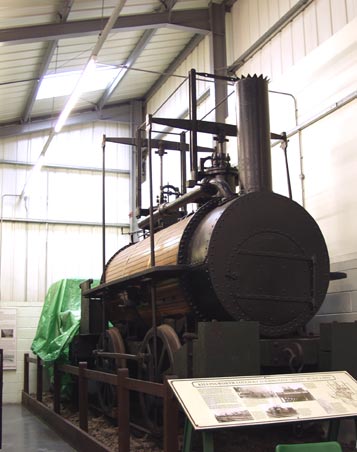
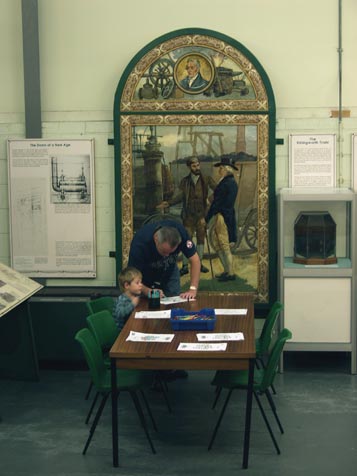
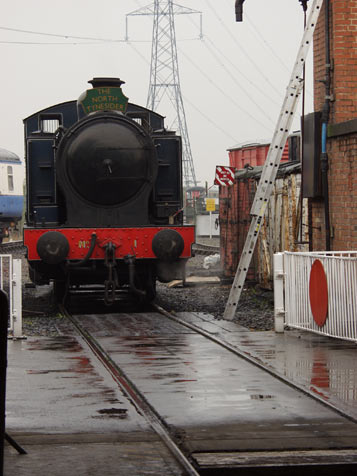
The loco pictured here is "The Billy" the oldest existing Stephenson loco and was developed from the lessons learned from making "Blucher". The painting to the left here
commemorates his meeting with Edward Pease and making plans to create the Stockton to Darlington railway in 1825.
These items are exhibited at the George Stephenson Museum at Middle Engine Lane,
North Tyneside. Below is a model of a later loco "Comet".
|
|
 |
|
|
The two biggest changes that Stephenson brought to the design was running on smooth steel tracks with flanged
wheels without rack and pinion drive, and coupling the steam force directly to the wheels by connecting rods.
Together with his son, Robert, and partner Pease he formed a locomotive factory, the
first in the world, in Forth Street in Newcastle, at the rear of what is now the Central Station.
The 1973 aerial view below shows the curved station roof. Stephenson's works was in the derelict
site at the lower central right section between the tracks and the road. Of note is the upper left demolition work of the Douglas Hotel to make way for a hideous British Rail office block, "Douglas
House" that was hardly ever used.
|
|
|
 |
|
|
|
©1973 Norman McCord, Newcastle University
|
|
|
|
|
|
In later years steam power was to give way to electric and diesel, but George Stephenson and his son Robert were
to determine the course of world economic development and their effects will be felt for centuries to come.
By means of the new and relatively inexpensive network of rails the British Empire could
convey the goods for its commerce and the tentacles of its control. There was hardly a country or territory in the world that did not embrace the revolutionary railways, a cheaper faster and more
flexible transport solution than the canals!
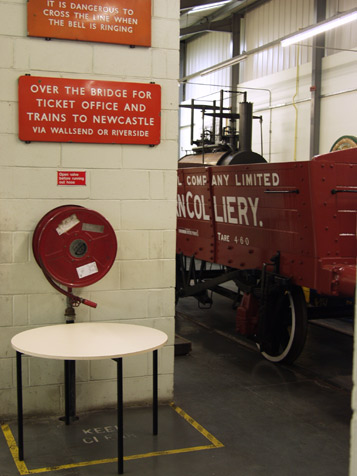
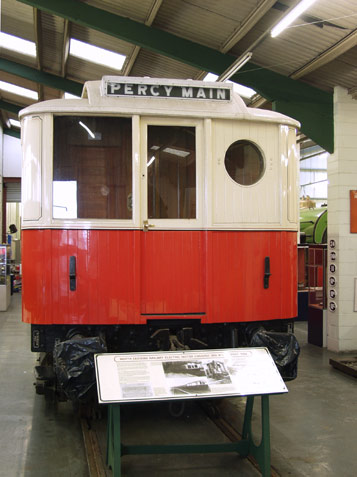
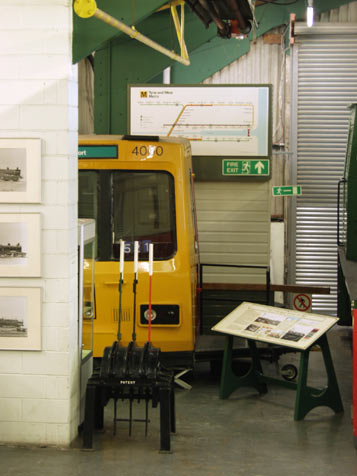
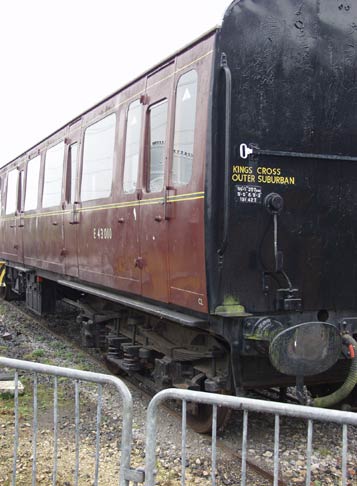
The electric train pictured to the left was built to travel around the Tyneside loop during the late 19th and the first half of the 20th century. It
was replaced by end of life diesel multiple units until the Tyneside Metro took over in 1979. Below is a cab mock-up, initially used in training, and latterly as a safety display for schools.
Stephenson may not have been the first to make or indeed the inventor of steam railways, but he took the ideas of others and improved them beyond comparison. He had the vision to see the global
implications of some small engineering solutions. Indeed, his fame grew as did the length of his tracks. Others such as Brunel and Hudson sometimes eclipsed him in feats of grand and monumental
engineering, but it was Stephenson who started a transport system that turned the world into a market place and paved the way for modern capitalism and enterprise. His legacy to us was in subduing time
and space.
|
|
|
|
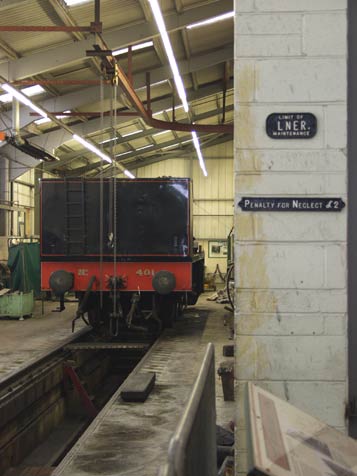
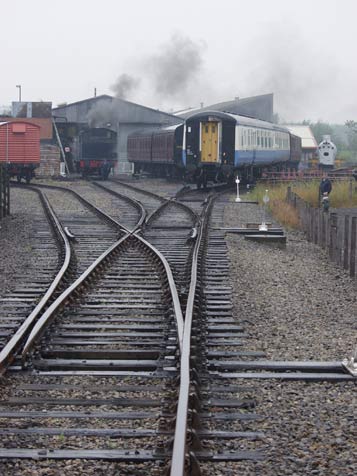
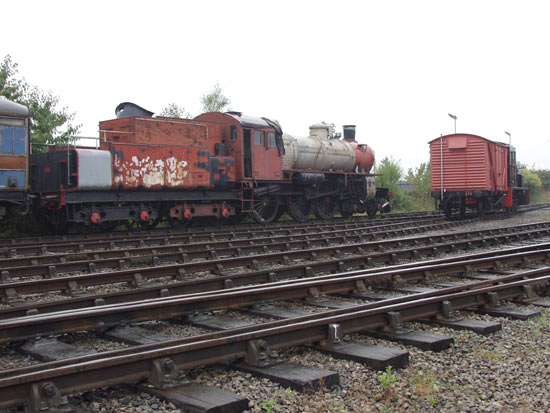
The Stephenson Museum is a small affair incorporating the test track built to develop the Tyneside Metro. That
in turn was built from disused mineral lines and old colliery land. Today a length of track runs from a cramped engine shed and trains run during the summer months on Sundays and Bank Holidays.
Whilst lasting examples of Stephenson's work exist throughout the world, the centre with his name here in his home territory seems sadly lacking. Strangely, Newcastle has been reluctant to honour one of
its most illustrious innovators. John Lough's 1862 grandiose statue and monument casts him in a romantic and Classical light that surely was not his in life. Where are the streets, squares and
engineering institutes bearing his name?
|
|
|
|
|
|
|
|
During his earlier years he made many enemies amongst landowners seeking to prevent the monstrous trains running
over their property. They undoubtedly wished to put a stop to his rise to fame and fortune. His Manchester to Liverpool railway plan with its ingenious solution to crossing the boggy marsh of Chat Moss
was originally blocked by bewigged barristers declaiming his "inconceivable arrogance". The later Rainhill trials during which Stephenson's "Rocket" reigned supreme vindicated his engineering vision and
overturned the original blockages to this link between the country's second most vital commercial centre and its shipping centre, Liverpool.
Stephenson had other lifelong enemies, like Sir
Humphrey Davy who never forgave George for inventing the miners' safety lamp before he did.
|
|
 |
|
|
In a speech given at the Assembly Rooms in 1844 the 63 year old Stephenson described the earlier difficulties he
suffered at the hands of rich men with vested interests. "I was a poor man" he said, on more than one occasion, "ranged against the mightiest in the land!"
However, by the age of 45 he had a
bustling factory, numerous consultancies, and he was receiving generous interest and dividend payments from earlier investments. Both he and his son, Robert, were reactionary and capitalistic Tories, and
had made generous wills favouring not a penny piece to workers or their associations.
Fourteen years after his death, the monument to Stephenson was opposed by William Newton, a tireless
campaigner for health and welfare for all and against vested interests.
|
|
|
|
|
|
|
|
Ruskin and other Liberal reformers despised the railways as symbols of capitalist greed. The 1920s and 30s
raised precious thinkers like Osbert Sitwell and Malcolm Muggeridge who sneered down their nasal passages at industry and its foul smells and nasty sharp edges. During the 1960s Newcastle's leaders
proudly declared the industrial era over and promptly tried to demolish everything within sight.
George Stephenson died in 1848 and people have tried to bury him ever since. He was not perfect,
and surely has not fitted well with the various political winds since, but he is dead. His views and hypocrisies have no currency today, but his ingenuity and drive have helped make today what it is, and
tomorrow what it might be.
Yesterday is only how we choose to remember it.
|
|
|
|
|
|
|
Site and contents (unless otherwise stated) ©
Tim. Pickford-Jones and Timmonet, Newcastle upon Tyne, United Kingdom.
|
|
|
|
|
|
|
|
 |
|
|
If you should arrive here via a search, or be missing the navigation on the left hand side, click this button.
|
|
|